Interior LED lighting in a car or van, done cleanly
Interior LED lighting looks simple and is easy to do badly. The difference between a clean job and a poor one is mostly out of sight: how the light is spread, how the cable runs and how the circuit is protected.
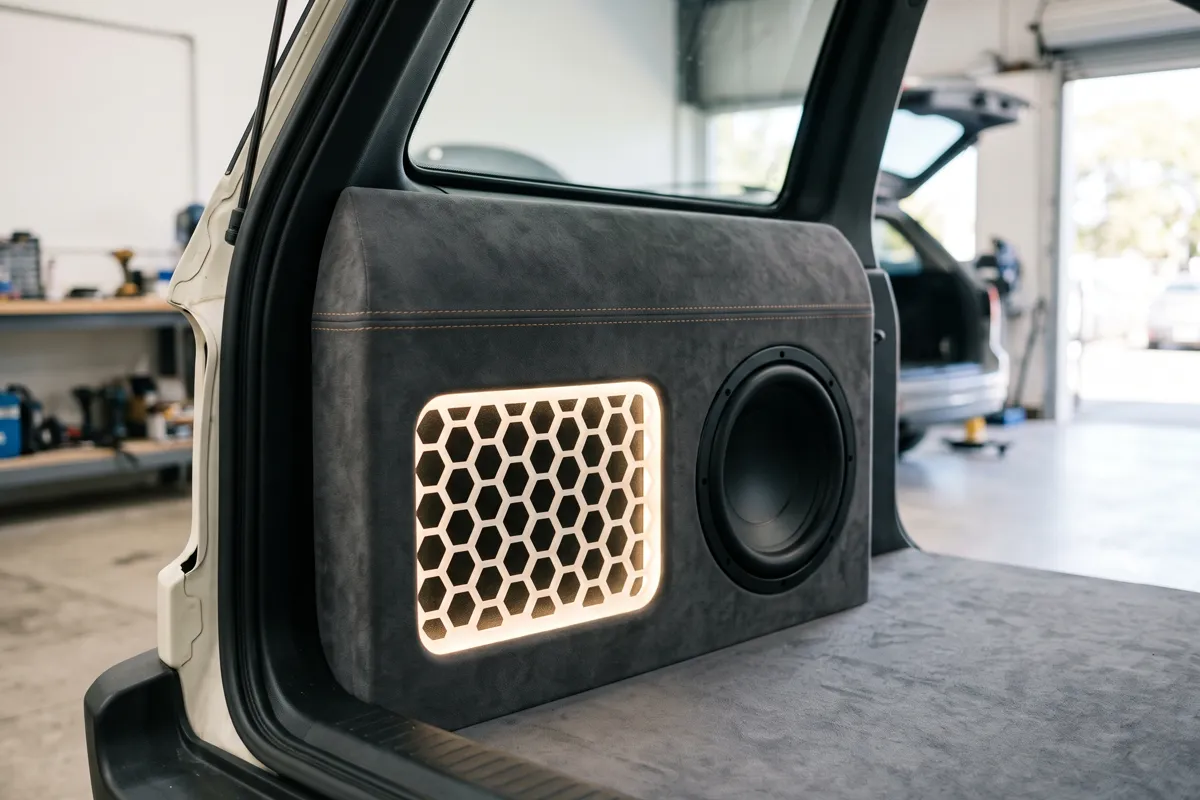
Light the surface, not the eye
An LED strip is a row of bright points. Seen directly, it glares and shows as a line of dots. Good interior lighting hides the strip and lets you see only the surface it lights: a footwell, a shelf, the edge of a panel.
Where the strip cannot be hidden, it sits in a channel under a diffuser, a milky cover that blends the points into one even line. The deeper the strip sits behind the diffuser, the smoother the line. Ask to see a sample lit before it is fitted.
Hide the wiring properly
Cable should follow the vehicle’s own wiring routes behind the trim, held with clips, never left loose or pressed under a carpet edge. Where it passes through metal it needs a rubber grommet, so the edge cannot cut the insulation.
Some places are not for cable. Keep wiring away from seat rails, pedals, the steering column and anything that moves. Do not run cable or fix strips across the pillars and roof edges where curtain airbags open. Joints should be crimped or soldered and insulated, not twisted and taped.
Fuse close to the battery, cable sized for the current
Every new circuit needs its own fuse, placed as close to the battery or the power source as practical. The fuse protects the cable: if the cable is damaged and shorts to the body, the fuse opens before the cable overheats. So the fuse is chosen to suit the cable.
The cable is chosen for the current it carries and for its length. A thin cable on a long run loses voltage, so the far end of a strip looks dimmer, and the cable warms. Never take power from an airbag circuit or another safety circuit. Ask the installer to show where the new circuit is fed and fused.
Heat
LEDs run cooler than old bulbs, but they do make heat, and heat shortens their life. An aluminium channel carries the heat away from the strip. A strip stuck to foam or fabric, or shut in a closed space, ages sooner.
A parked vehicle in the sun gets very hot inside. Adhesive backing alone often lets go in that heat, so strips are held by channels or clips as well. Controllers and power supplies also need a place with some air around them, not a pocket of insulation.
Do not dazzle the driver
At night, a light inside the cabin can reflect in the windscreen and the side glass and reduce what the driver sees outside. Keep light low in the cabin and aimed down. No light source should sit in the driver’s line of sight or in the mirrors.
Fit a dimmer, and keep the cabin lighting low or off while driving. Check the result from the driver’s seat in the dark, before the trim is closed up. In a working van, light the work area brightly and keep that light behind the bulkhead.