Pet grooming van layout: water, power and airflow
A pet grooming van is a small wet room on wheels. It has to hold water, heat, power and a nervous animal in a few square metres, and still be easy to clean. A good layout follows the order of the work.
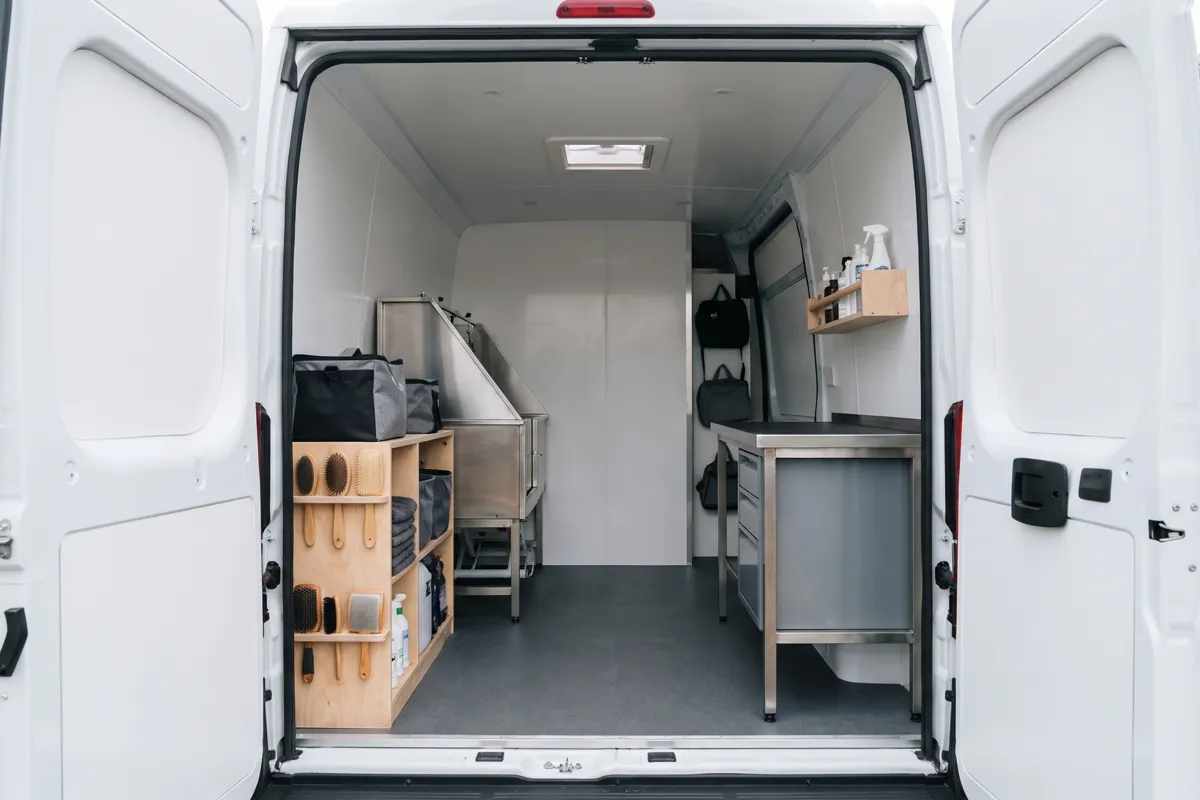
Follow the order of a groom
An animal comes in, is bathed, is dried, is finished on the table and goes out. Place the tub, the dryer and the table in that order, so the groomer never carries a wet animal across the van. Decide first which door the animals use.
Keep the floor between those points clear. Storage for shampoo, towels and tools belongs within reach of the place where each is used. Give the groomer room to stand on at least two sides of the table, and a secure point to hold the animal.
Place the tub and the tanks
A tub full of water is among the heaviest things in the van, and so are the tanks. Keep them low and close together, so the pipes are short and the weight sits where the van carries it well. Add their full weight to the payload sum.
Think about how the animal gets into the tub. A low tub, a ramp or a step saves the groomer’s back and keeps a large dog calm. The surface inside the tub should give the animal grip, and the edges around it should shed water back into it.
Fresh water and waste water
The van needs two tanks: one for fresh water and one for waste. The waste tank should hold at least as much as the fresh tank, so it cannot overfill before the fresh tank runs dry. Both must be fixed to the structure, because a full tank is heavy.
Fit a hair trap before the waste tank, where it can be reached and emptied. Empty the waste tank at a proper drain, never onto the ground. Ask for every pipe joint to be reachable, so a leak can be found and mended without taking the van apart.
Power for the dryer and the heater
The dryer and the water heater usually draw the most power. List every appliance and add up those that run at the same moment: that total, not the sum of everything, sets the size of the power source. Leave a margin above it.
Water and electricity share this van, so protection matters. Each circuit needs its own fuse or breaker, and sockets must sit away from spray. Ask the installer to show how a person is protected from shock if an appliance fails, and where the main switch is.
Air, heat and surfaces you can clean
A dryer adds heat, damp and loose hair to a small space. The van needs air drawn out as well as cooling, and batteries need the ventilation their maker specifies. An animal must never be left alone in a closed van, least of all in a hot climate.
Choose surfaces that do not soak up water: sealed panels, a single sheet of non-slip flooring turned up at the walls, and sealed joints. Rounded corners and few ledges leave hair nowhere to gather. What cannot be wiped clean should not be in the wet area.