Car restoration order: metalwork, then paint, then trim
An older car is restored in a fixed order: metalwork, then paint, then trim. The order is not a habit. Each stage would spoil the one after it if it were done late, and each one shows problems the stage before it had hidden.
Why the order matters
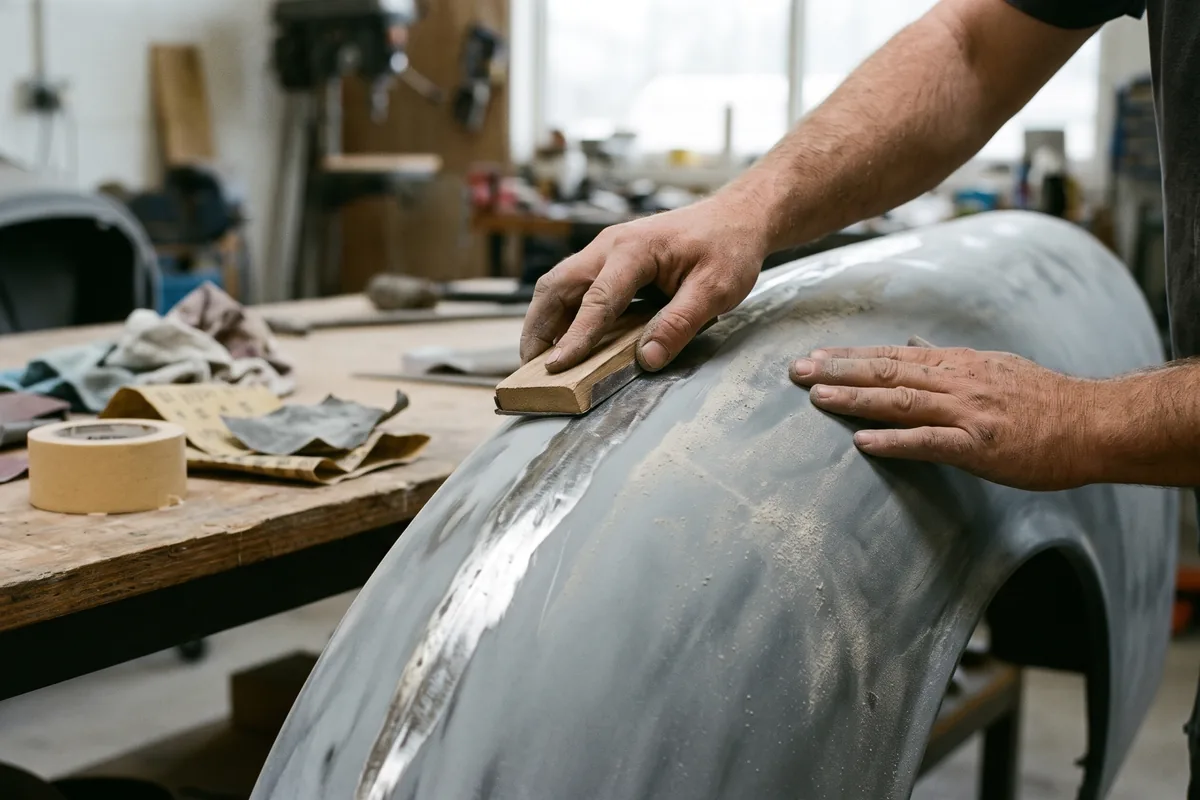
Welding and grinding throw sparks, heat and metal dust. They would burn paint and ruin leather, carpet and glass nearby. So all cutting and welding is finished before any finish paint goes on.
Paint comes next because it must reach places the trim will later cover, and because spray drifts onto everything close by. Trim comes last: it is the soft, clean layer, and it goes into a shell that will not be cut, welded or sprayed again.
Take it apart and keep a record
Photograph the car before anything is removed, and keep photographing as it comes apart: how a cable runs, which clip holds which strip, the order of washers on a bolt. Those pictures are the assembly manual later.
Put fixings in labelled bags, one bag for each part of the car. Keep every old part until its replacement is fitted and proven, even a damaged one. A torn panel is still the pattern for a new one, and small trim pieces for older cars can be hard to find.
Rust and hidden damage
Rust is nearly always larger than it looks. A bubble in the paint usually means the metal beneath is already corroding. It gathers where water sits: sills, floors, wheel arches, the bottoms of doors and the frames around glass.
Old repairs hide things too, such as thick filler over a dent or a patch welded over rust. The true condition is known only when the shell is stripped to bare metal, so the plan is confirmed after the strip-down, not before. Rust is cut out back to sound metal and new steel is welded in. Filler over rust only delays it.
From bare metal to paint
Bare steel begins to rust quickly, sooner still in humid air, so it is primed soon after the metalwork is finished. Seams are sealed and closed sections are protected inside, because water finds the places paint did not reach.
Before the colour goes on, the car is put together dry: doors, the bonnet, the boot lid, wings, glass and bright trim are fitted and adjusted so the gaps are even and everything meets. It is far easier to move a panel before paint than after. Then the parts come off again and the paint is applied in clean air.
Trim goes in last
Once the paint has hardened, the wiring goes in, then sound-deadening mat, then the soft parts. The order inside the trim matters too. On many older cars the headliner goes in before the glass, and the carpet before the seats.
This is the stage where patience shows. Painted edges are protected with tape and covers while seats, panels and bright trim are fitted. Each electrical item is tested before the panel that hides it is closed, so nothing has to be taken apart twice.