Leather, vinyl or fabric seats for a hot climate
A seat cover in a hot climate has a hard life. It sits in strong sun behind glass, takes sweat, dust and sand, and is slid across many times. Leather, vinyl and fabric each answer that differently, and the choice depends on how the vehicle is used.
How each material handles heat
Leather and vinyl feel hotter to the skin than fabric after the car has stood in the sun, because a smooth, dense surface passes its heat to the body quickly. Fabric lets air through its weave and feels milder. Colour matters as well: a dark surface in direct sun gets hotter than a light one.
No material stays cool in a closed car. Shade, window blinds and a throw over the seat do more than the choice of material alone. If the vehicle is parked outside for long stretches, a lighter colour is the simple, lasting help.
Sun and fading
Sunlight fades dyes and ages every seat material. Leather dries out and can crack if it is never cleaned and conditioned. Vinyl can harden and split as it ages in the sun. Fabric fades, and its fibres weaken where the light falls on them most.
Ask for material made for vehicle seats, not for furniture. Automotive materials are made to stand more sunlight and heat than household ones. Ask the trimmer what the material is and how it should be cared for, and keep that note.
Cleaning and wear
Vinyl wipes clean with a damp cloth, which suits a working van or a vehicle that carries children or animals. Leather also wipes clean but needs gentle products and regular care. Fabric soaks up spills and holds dust and sand, so it needs a vacuum and now and then a deeper clean.
Most wear falls on the driver’s seat, at the outer edge you slide over when getting in. Sand acts like an abrasive on any material. A sound seat cover is cut so that the hardest wearing piece sits in that place, and so that a single worn panel can be replaced later.
Perforation and air
Perforated leather or vinyl has small holes that let air and moisture pass. It feels less sticky against the back and legs, and it is needed where a seat blows air through its surface. It is usually used on the centre panels, where the body rests.
The holes have a drawback: they collect dust and spilled liquid, and they are harder to clean than a plain surface. Liquid can pass through to the foam beneath. For a vehicle that works in dust or with wet loads, plain panels are the simpler choice.
Thread and stitching
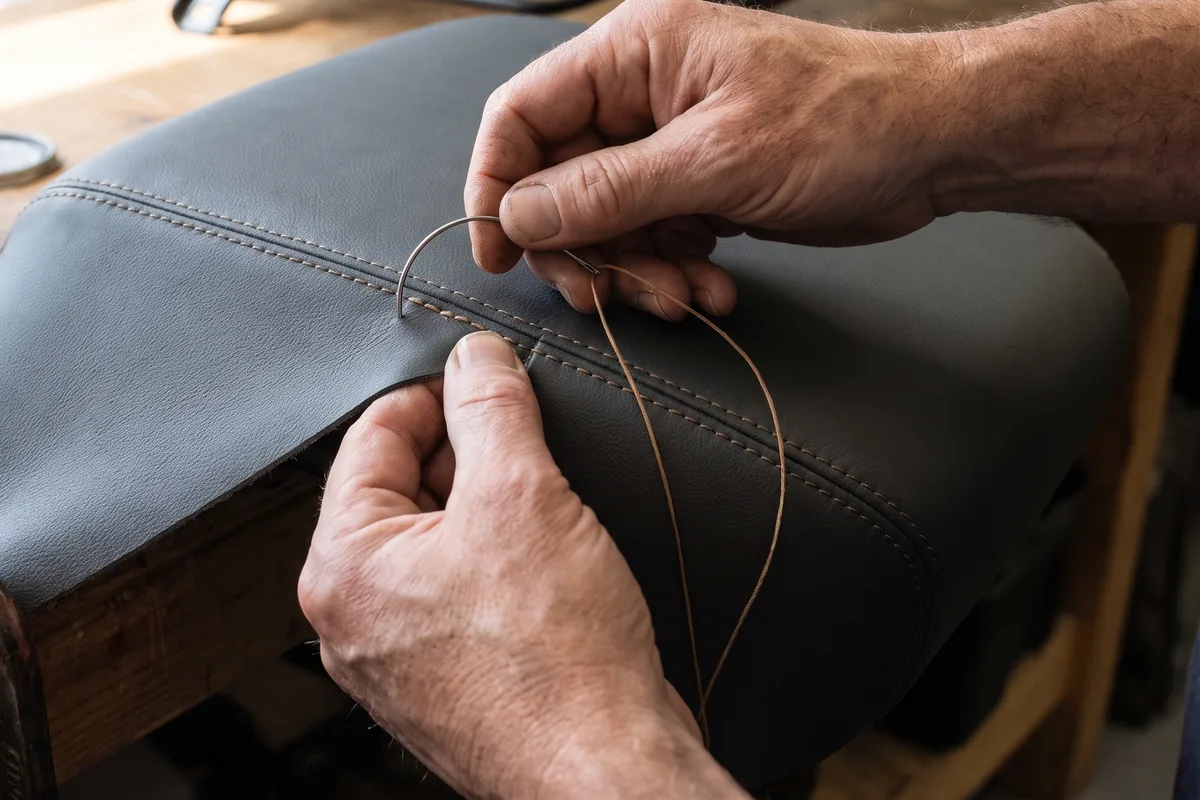
A seam fails before the material does if the thread is wrong. Sunlight weakens thread as it weakens cloth. Ask what thread is used: a bonded polyester thread made for outdoor or vehicle use stands sunlight far longer than cotton thread.
Some seams do a safety job. A seat with a side airbag has a seam made to open when the airbag fires, and a new cover must keep that working as the maker designed it. Tell the trimmer about seat airbags, seat heaters and sensors before any cover is cut.